97% of US consumers have engaged in health and wellness behaviors over the past two years. 52% say they will pay a premium for beverages that support those goals. That data, from the EY Consumer Beverage Survey released in March 2026, points to a shift employers are seeing inside their own buildings. Workplace refreshment programs are being measured against expectations like these, and the bar for what they have to deliver is moving fast.
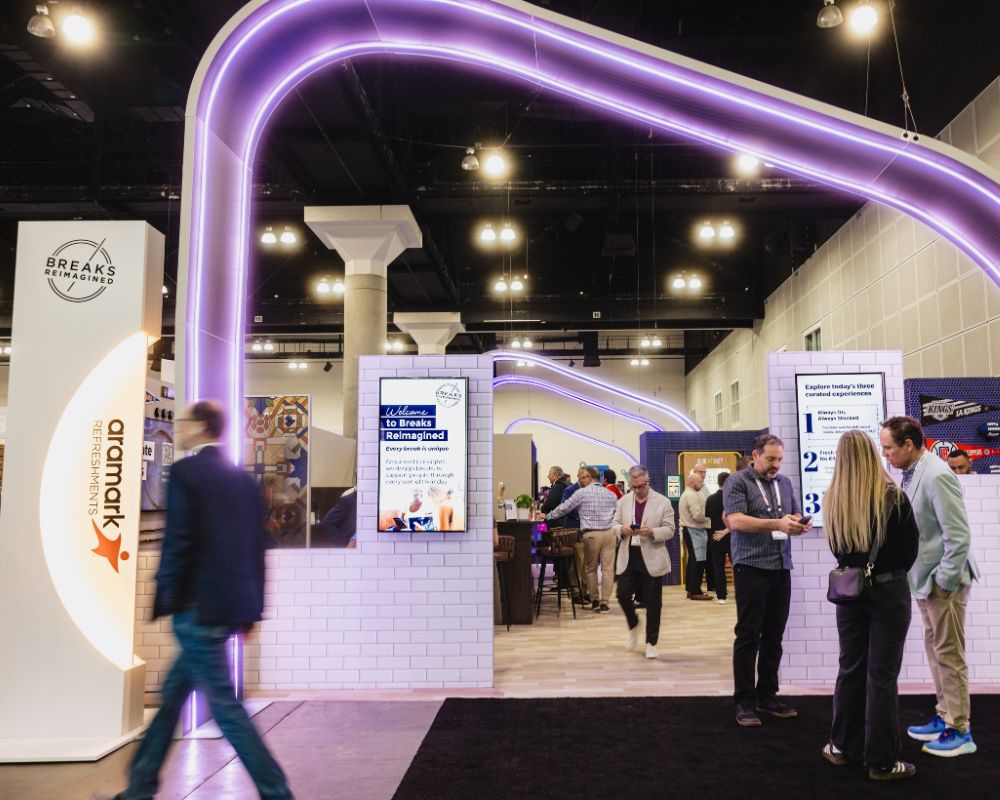
Aramark Refreshments was at the center of that conversation at NAMA 2026, moderating and participating across five panels covering wellness strategy, beverage innovation, workplace design, data-driven program management, and smart technology.
What started as a convenience play, vending machines, a drip coffee pot, a case of water, now has to work harder. Employees want destinations they actually use, not just equipment that fills a corner of the floor.
Here are six insights from those conversations, and what they mean for employers building programs that actually work.
01. Wellness Has Moved From "Nice to Have" to Baseline Expectation
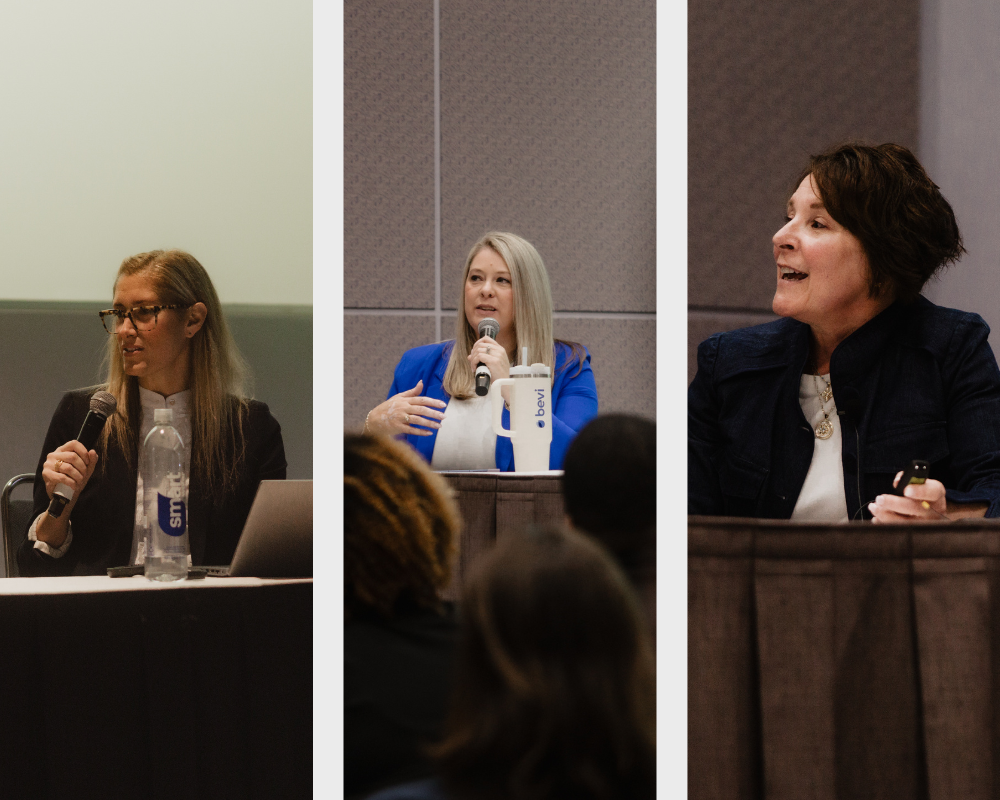
Erin Moshier, Chief Growth Officer of Aramark Refreshments, came to NAMA 2026 with a clear point of view on wellness: it is no longer a program feature employers can layer in later. It is the foundation employers are now expected to build from. Participating in the Wellness Beverage Strategy Panel alongside Cathy Lewenberg, CEO of Bevi, and Suzanne Navarro, Head of Global Food and Beverage at Anduril Industries, Moshier brought an operator perspective to the same shift the EY Consumer Beverage Survey documented earlier this year, and one Aramark Refreshments sees in the field every day.
Lewenberg added category-level context to the conversation. Building on the EY findings, she pointed to the functional beverage segment, spanning energy support, immune health, digestive health, mood support, and performance, as growing at roughly twice the pace of traditional beverages, with projections that put the category past $350 billion globally by 2033. Mood support is the fastest growing of the five segments. Energy and electrolytes remain the largest.
"I think, from an operator perspective, we're already seeing an impact just in the push of demand for low sugar rates and wellness forward solutions. And I think that's an impactful layer."
— Erin Moshier, Chief Growth Officer, Aramark Refreshments | Wellness Beverage Strategy Panel
For employers, the shift is already underway. The most effective programs do not restrict choice, they make better options easier to reach, across every part of the day and every type of employee. That requires a program built with intention, not one that defaults to whatever fills the shelf fastest.
02. Refreshment Programs Are Being Built Into the Workday, Not Bolted On
One of the clearest shifts Erin Moshier, Chief Growth Officer of Aramark Refreshments, has observed in how employers approach refreshment programs is the question they are starting with. It used to be: what products do we stock? Now it is: what do employees need access to, and how do we build a program that delivers it consistently?
That shift shows up in program design. Moshier made the case on the wellness panel that the most effective programs are built around how employees actually use the space, not just what gets stocked in it. The goal is a program employees return to because it works, not one they walk past because it does not.
"And so when we're tailoring a program for a client, it's not about what flavor of water do you have or what kind of coffee do you want to brew. It's what kind of experiences do you want your teams to have? Where do you expect them to have these intersections of connection, and how do we enhance what that experience will feel like?"
— Erin Moshier, Chief Growth Officer, Aramark Refreshments | Wellness Beverage Strategy Panel
Suzanne Navarro, Head of Global Food and Beverage at Anduril Industries, reinforced that perspective, noting that varying offerings across floors or locations is not inequity, it is strategy. It increases utilization across the building, drives participation in spaces that might otherwise go unused, and gives programs a reason to be sought out. Cathy Lewenberg, CEO of Bevi, added that some of the most deliberate clients she works with intentionally differentiate refreshment programs by floor for exactly that reason.
03. Consumers Want Beverages That Feel Like Theirs, and the Workplace Has to Keep Up
Pamela Raskin, VP of Innovation and Customer Experience at Aramark Refreshments, cut to the program design question: how do you build a refreshment program that delivers personalization at scale without adding complexity operators cannot sustain? The data from the panel showed the window to answer that question is narrowing fast.
Dirty sodas, layered customizable drinks built on soda, seltzer, or energy drink bases with flavored syrups, creamers, and cold foam, moved from a regional trend into mainstream foodservice in 2025 and 2026.
"Talking about functional – there is significant demand for functional beverages. And honestly, I don't think it's a trend. It's movement that maybe we haven't seen at this scale before, but I do believe it is going to stay."
— Pamela Raskin, VP of Innovation and Customer Experience, Aramark Refreshments | Beverage Trends & Innovations Panel
Kathy Kennedy, Senior Director of Marketing at PepsiCo, noted that high complexity and nostalgic simplicity are growing at the same time, and what connects both ends of the spectrum is personalization. Consumers want drinks that feel intentional and tailored to them. That expectation does not disappear when they walk into the office.
For operators, the playbook is straightforward: build a reliable core assortment, then layer in seasonal offerings, limited time flavors, and customizable formats such as syrups, enhancers, and flavored bases, that keep the program feeling current without adding operational weight.
" Consumers want drinks that meet them where they are, whether that is playful and expressive or calm and familiar. Preferences are only preferences in a single moment. Consumers flip back and forth between the heavily flavored, layered drinks and the simple, back-to-basics ones."
— Pamela Raskin, VP of Innovation and Customer Experience, Aramark Refreshments | Beverage Trends & Innovations Panel
04. Scaling a Program Requires a Repeatable Backbone, and a Partner Who Builds It With You
Erin Moshier, Chief Growth Officer of Aramark Refreshments, moderated the client priorities and data panel, and her framing of the central challenge was direct. With hands-on experience scaling refreshment programs across complex, multi-site environments, Moshier knows where these programs break down. She brought that perspective to the room and used it to anchor a conversation about what separates programs that scale from ones that stall.
The answer Moshier brought and that the panel validated, is a standardized program foundation with customization built on top. Trying to be everything to everyone at every location is not a sustainable model at scale. Aramark Refreshments builds repeatable program foundations that do not require a custom build at every new site, then layers in regional, demographic, and location specific tailoring where it makes the most impact. Local service teams handle the day to day. National infrastructure handles the scale. That combination is what allows a program to stay consistent across ten locations or ten thousand without requiring a different solution at every door.
"When you think about aligning culturally, understanding insights and priorities and then layering in data that supports that conversation, I think that's the key differentiator in driving buy in and driving experience."
— Erin Moshier, Chief Growth Officer, Aramark Refreshments | Client Priorities & Workplace Data Panel
05. Smart Technology Is Closing the Gap Between What Employees Expect and What Is Actually on the Shelf
James Boushka, Senior Director of Technology Innovation and Growth, Aramark Workplace Experience Group, brought a ground level perspective on how AI and smart sensor technology are changing what operators can know, and how fast they can act on it in unattended and self serve environments.
Boushka walked through a pilot his team has been running over the past year, using vision and sensor technology to capture real time data at the individual product level, tracking availability, customer behavior, and demand patterns across locations. Before the pilot, product compliance, meaning the right item actually being available when a customer wanted it, sat below 73%. By adjusting assortment and stocking patterns based on actual customer intent rather than historical sales alone, compliance rose by more than five percentage points.
"I want to understand the future, because what a customer wants tomorrow is not necessarily what they bought yesterday. I also want to give my operational team confidence in the recommendations they are getting, on what to stock and when to stock it."
— James Boushka, Senior Director of Technology Innovation and Growth, Aramark Workplace Experience Group | Technology & Unattended Retail Panel
The distinction Boushka drew matters for employers evaluating refreshment partners. The goal of this technology is not visibility for its own sake. It is reliability, closing the gap between what an employee reaches for and what is actually there. That gap, when it exists consistently, erodes trust in the program and sends employees out the door to find what they need somewhere else. When it is closed, the program earns a place in the workday it keeps.
06. You Cannot Design a Great Workplace Without Designing the Refreshment Program Into It
Diane Pancoski, VP of Marketing Strategy and Innovation at Aramark Refreshments, moderated a panel centered on workplace design and innovations, to address something operators have long understood intuitively but rarely articulate this directly: the refreshment program and the space it lives in are not separate decisions. They are the same decision.
"It is how you build these spaces differently. That applies to every little break room and every large headquarters with multiple places for people to eat, relax, or work."
— Diane Pancoski, VP of Marketing Strategy and Innovation, Aramark Refreshments | Workplace Design & Innovations Panel
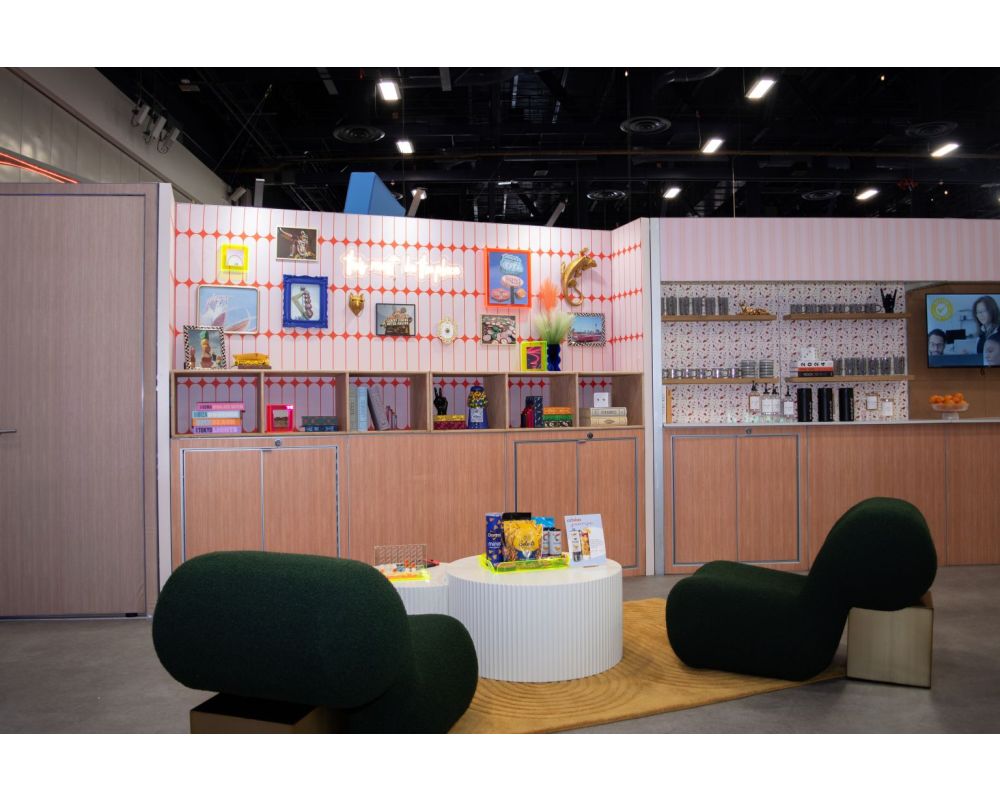
How a space is designed determines whether employees use the program or walk past it. Participation follows design. Nicole Norgren, Senior Creative Director at MultiStudio, described a design approach organized around four principles that used to be treated as separate considerations.
"We are starting to reframe what workplace culture is. We are designing around four key principles right now: wellness, space, hospitality, and connection. These used to be siloed ideas. They all layer into human experience, and they all have to be accounted for."
— Nicole Norgren, Senior Creative Director, MultiStudio | Workplace Design & Innovations Panel
The Program Has a Bigger Job Now. Build It That Way.
Aramark Refreshments came to NAMA 2026 with a clear perspective on where workplace refreshment is going and left with multiple panels worth of industry validation behind it. The employers and operators building programs that perform share a common approach:
-
Treat wellness as a program foundation, not an add-on
-
Design the space and the program together, not separately
-
Build a scalable, repeatable foundation and then customize with intention
-
Use data and smart technology to close the gap between expectation and delivery
-
Choose a partner who can grow with the business, not just serve it today
When refreshment programs are built with these principles in mind, they do more than stock products. They become programs operators can stand behind and employees can count on, built to perform at location one and location one hundred.
Interested to learn more about Aramark Refreshments? Contact us to get started.