
New equipment opportunities come to us from many sources: client feedback, changing consumer preferences, sustainability goals, digital transformation efforts, and ongoing collaboration with manufacturing partners. Regardless of the source, we evaluate each one through the lens of market need and operational value, not novelty alone. Today, our innovation pipeline includes more than 75 active initiatives.
Our testing process is intentionally hands-on. Before a new format is considered for broader deployment, we install, operate, stock, clean, and work through its service and maintenance needs in our own office, first in a controlled environment and then in a working break space. By experiencing the solution from every angle, we can identify friction points, validate assumptions, and refine performance. Solutions that meet our standards then move into live pilot client environments, where we gather additional insights and make adjustments before considering an expanded deployment.
Innovation Starts with Empathy, not Equipment
I’ve worked across the industry, both as an operator managing programs and as a manufacturer developing equipment. Now, as Director of Equipment Innovation for Aramark Refreshments, I evaluate equipment across the full break space, including vending, coffee, 24/7 markets, and fresh food solutions. While these categories serve different needs, the criteria for earning a place in a client’s space remain the same: it must work for everyone responsible for choosing, using, selling, and supporting it.
I believe innovation starts with empathy, not equipment. This is a core tenet of the Design Thinking approach we use at Aramark. The first question is not, “What can this machine do?” It is, “Who are we developing this for, and what do they need?” That’s why we maintain an innovation lab where clients and prospects can interact with equipment firsthand while we observe and learn from their experience. Watching someone use a machine for the first time reveals insights that no specification sheet ever could. If a solution isn’t intuitive for every user, it may perform well in a demonstration but struggle in the real world.
That user-first mindset guides every decision we make, from the framework we use to evaluate new technologies to the rigorous testing each solution undergoes before implementation. It has led us to a practical framework: every solution must work for five distinct stakeholders.
Five Stakeholders Decide Whether a New Solution Works
I don't evaluate equipment through a single lens. Every format must work for five different stakeholders: the consumer, the client, the caretaker, the seller, and the service technician.
The consumer is the person who interacts directly with the equipment. If the experience isn’t intuitive or the product fails to meet expectations, the consumer may not return. Every interaction needs to inspire the next one.
The client is the organization choosing the program for its facility, purchasing our services and bringing the program into its space. The solutions must support the overall experience, fit the client's brand, align with priorities, and perform consistently. Reliability is not a value-add, it is the baseline.
The caretaker is the person or team responsible for keeping the equipment stocked, clean, and ready to use. If replenishment is cumbersome, cleaning is difficult, or routine tasks create safety concerns, the solution will struggle in the field regardless of how well it performed in a demonstration.
The seller is responsible for matching the solution to the client’s need and communicating its value clearly. If the value proposition is too complex to explain simply, it becomes harder to sell and less likely to reach the people it was designed to serve.
The service technician is responsible for putting the equipment into service safely, maintaining and repairing it over time. Every additional step in the installation process adds time and cost, and every unnecessarily complicated repair extends downtime and operational expense.
A solution succeeds when all five stakeholders can say yes. If any one of these stakeholders is overlooked, even the most promising solution can struggle to succeed. Evaluating all five perspectives early helps us identify tradeoffs, improve the solution, and determine where it can deliver lasting value. That is what empathy looks like in equipment innovation. Designing not only for the person who uses the equipment, but for everyone required to make that experience work.
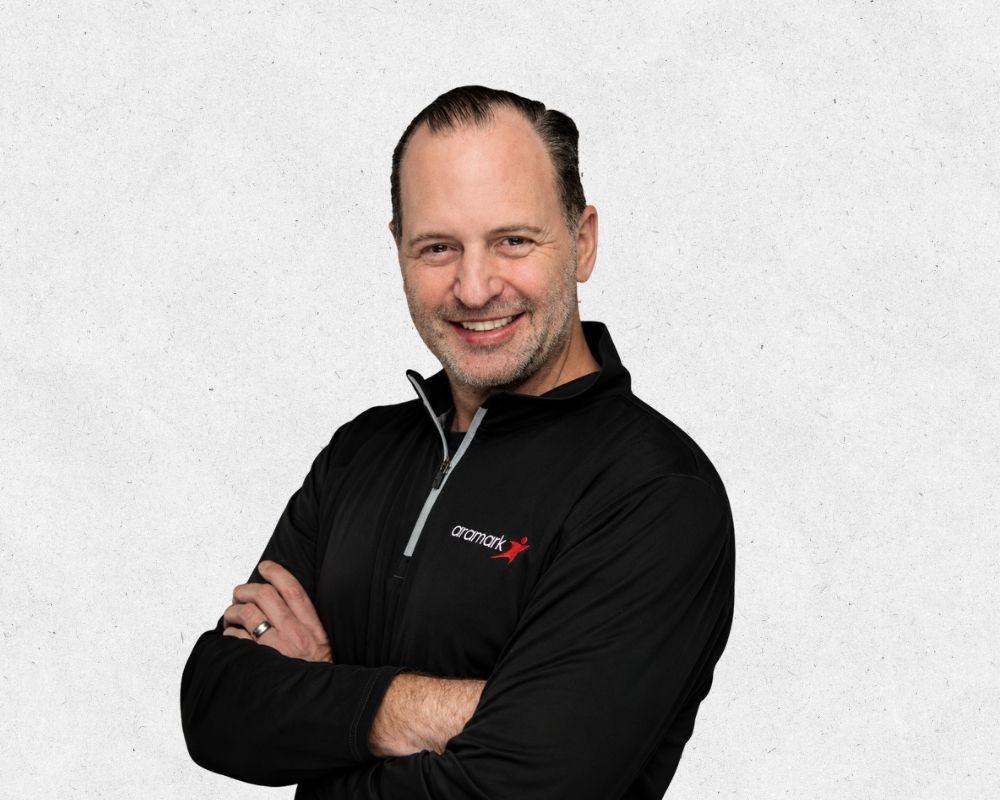
Marcel Winokur, Director of Equipment Innovation at Aramark Refreshments. Aramark Refreshments operates coffee, pantry, vending, micro market, and fresh food across a wide range of environments.


